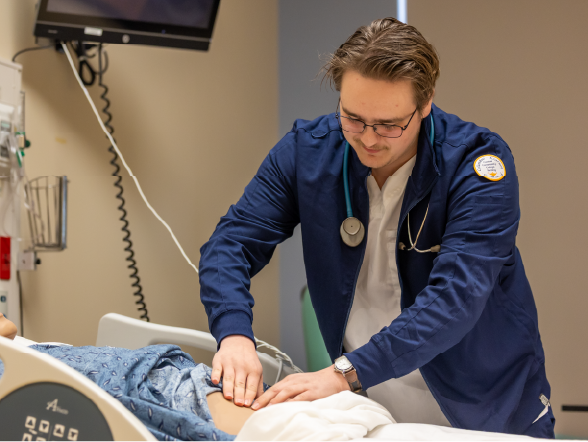
Nursing Education

Program Locations: Columbus Campus, Grand Island Campus, Kearney Center
Program Level: Diploma, Associate
Department: Health Sciences

Application Process

The 2026 application period for the Nursing program will start January 30, 2026 and will remain open until February 6, 2026.

Program admission is determined using a lottery system. Students accepted into the program will start in the fall semester. Applicants not accepted into the program are encouraged to apply during the next application period.

Please see the “Nursing Program Application Requirements” section of this webpage for additional details on the application process.


There has not been a better time to consider becoming a nurse. Healthcare is experiencing a critical shortage of nursing staff that is predicted to last beyond the year 2030. The field of nursing offers many opportunities, challenges, and rewards you will not find in other areas of employment. If you are dynamic, motivated, and possess a caring personality, our nursing program wants you!

Program Options

Associate Degree in Nursing

Diploma

Admissions and Degree OverviewCourse Descriptions

Course Sequence

Public Information


Pre-Nursing Info Session

Sessions are designed for students who are exploring Nursing programs and want to know more about the CCC program as well as students who are actively working on the CCC admission requirements and need a refresher of the application process.  

Click here to see upcoming dates and register.

Why Choose CCC for Nursing?

All students accepted into the program who successfully complete the first two semesters have the option to sit for NCLEX-PN exam for licensure. The student may then continue to take the remaining two (2) semesters of the program to receive an associate degree in nursing and take the NCLEX-RN exam for licensure.

Nebraska belongs to the National Council of State Boards of Nursing (NCSBN) compact. Any student passing the NCLEX-RN exam in Nebraska may also practice as a Registered Nurse (RN) in any of the other compact States without reapplying for a license in that state. View compact states

By choosing to earn a diploma or degree from CCC, you will receive an education that prepares a nurse for the challenges and demands of a fast-paced healthcare environment. Our curriculum provides a comprehensive, rigorous, and individualized education that prepares the student nurse for success in a variety of nursing roles. The program includes a concept based curriculum and a state of the art simulation area to improve student and program outcomes. Your education through CCC also offers a broad base knowledge in natural sciences, communications, and humanities.

The program is offered on three sites: Columbus Campus, Grand Island Campus, and the Kearney Center. Travel will be required to complete course and clinical requirements. 

State Licensure or Certification Requirements

States where licensure or certification requirements are met by this program’s curriculum – Nebraska.

No determination has been made for any other State as to whether the program’s curriculum does or does not meet licensure or certification requirements.

If a student from a state outside of Nebraska is interested in this program, state licensure will be investigated.

Graduates of this program are eligible to apply to take the NCLEX-RN exam. Nebraska belongs to the National Council of State Boards of Nursing (NCSBN) compact. Any student passing the NCLEX-RN exam in Nebraska may also practice as a Registered Nurse (RN) in any of the other compact States without reapplying for a license in that state. Click on this link to access all NCSBN compact states.

Transfer Options

Central Community College has collaborated with several four-year nursing programs throughout the state that allow credits to be transferred from the ADN program into a BSN program. The acceptance into a BSN program is subject to those colleges or university’s policies and requirements. Students are encouraged to contact the other college as early as possible.


Nursing Accreditation

Central Community College graduates meet the education eligibility requirements to apply for the National Council of State Board of Nursing Licensing Examination for either licensed practical nurse or registered nurse.

Central Community College associate degree and practical nursing program is approved by:

Nebraska State Board of Nursing- Health and Human Services

 301 Centennial Mall South,

 1st Floor, 14th and M Streets,

Lincoln, NE.  68508.


Central Community College associate degree program is accredited by:

Accreditation Commission for Education in Nursing (ACEN)
3390 Peachtree Rd. NE
Suite 1400
Atlanta, GA.  30326

Phone- 404-975-5000

www.acenursing.org

Central Community College Nursing Program current accreditation status is continuing accreditation.

CCC is fully accredited by the Higher Learning Commission.


Nursing Program Application Requirements

Nursing Program Application Requirements

*Application process must be completed on a laptop or PC*

The application period for the traditional Associate Degree Nursing (ADN) program opens in late January. Students accepted into the program will start the following fall semester. Applicants who are not accepted are encouraged to apply during the next application period. 

Traditional Nursing Student Admissions Requirements

The following items must be completed to apply in January. Please use the links provided within the online application to access these items.  

  1. Apply to Central Community College  and select Nursing as your area of interest.
  2. Active unencumbered Nebraska Nursing Assistant (CNA) certificate from the Nebraska DHHS Registry.
  3. Active American Heart Association Basic Life Support (BLS) for Healthcare Provider CPR certification 
  4. ATI TEAS score of 58.7% or higher (fees apply). Scores are valid for 3 years.
  5. BIOS 2250 Anatomy and Physiology I – must be completed with a grade of “B” or higher
    • BIOS 1010 General Biology is a pre-requisite course that must be completed prior to taking Anatomy & Physiology I. If you have completed BIOS 2250 Anatomy & Physiology I with a grade of D or C, you do not need to complete BIOS 1010 General Biology.
  6. ENGL 1010 English Composition I – must be completed with a grade of “C” or higher

Course Requirements:

In addition to BIOS 2250 Anatomy & Physiology I and ENGL 1010 English Composition I noted above, the following are the remaining general education classes required for the Nursing program.  It is suggested these are completed prior to starting the nursing program, but it is not mandatory.  Please note, these classes must be completed no later than the semester they are listed in the nursing curriculum sequence. 

  • BIOS 2260- Anatomy and Physiology 2 – must be completed with a grade of “B” or higher
  • PSYC 2890 – Developmental Psychology- must be completed with a grade of “C” or higher
  • BIOS 2460 Microbiology - must be completed with a grade of “C” or higher
  • ENGL 1020 English Composition 2 – must be completed with a grade of “C” or higher
  • Elective – choose one of these classes: BIOS 1010, CHEM 1050, CHEM 1090, MATH 1150, MATH 2170, NUTR 1470, PHIL 2650, PSYC 1810, SPCH 1110, SOCI 1010 - must be completed with a grade of “C” or higher
How to Apply

To apply to the Nursing Program in January, CLICK HERE. This link will only work during the 1 week application period in January.

Questions
lf you have questions on the application requirements, please contact the Pre-Nursing Advisor at 308- 398-7360.
Why choose Central Community College?
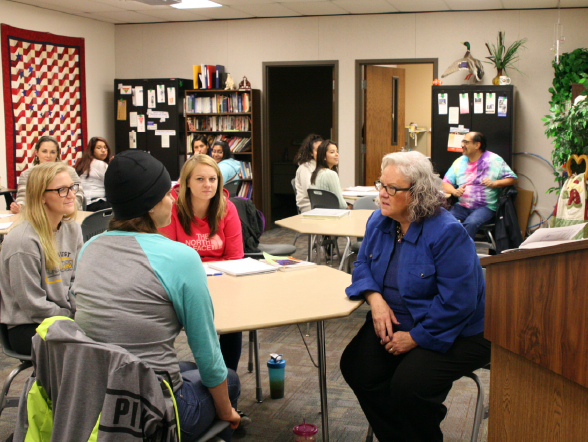
  • You receive individual attention with low faculty to student ratio
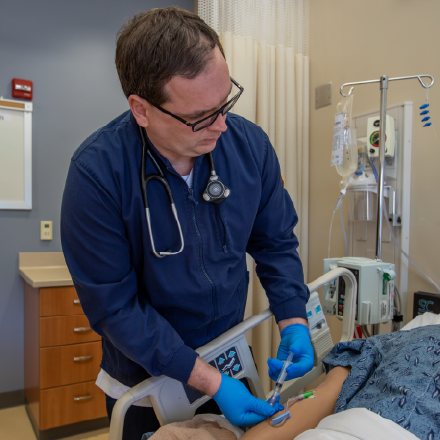
  • Hands-on experience! The best way to learn is to do. You will complete over 650 hours of clinical and simulation time.
  • Small group and interactive learning in theory courses enhance knowledge.
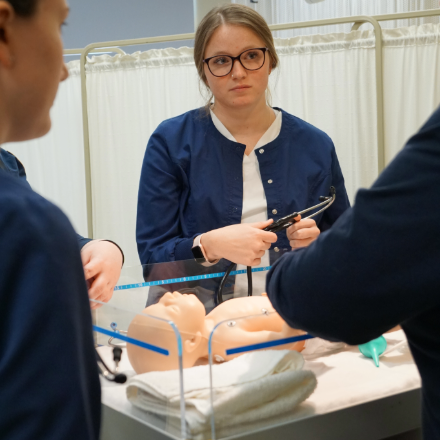
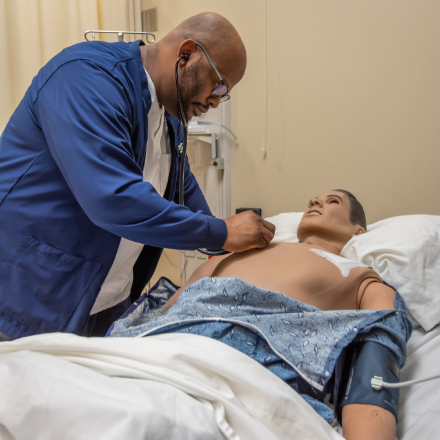
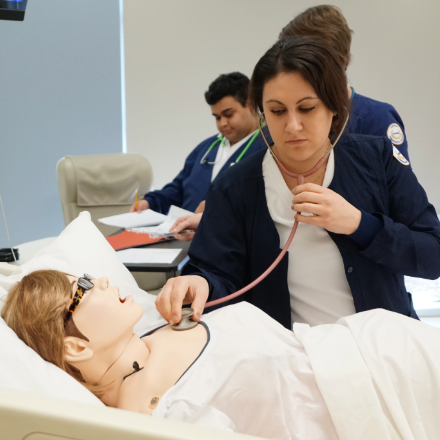
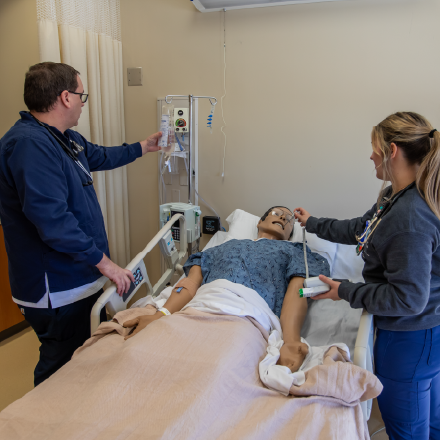
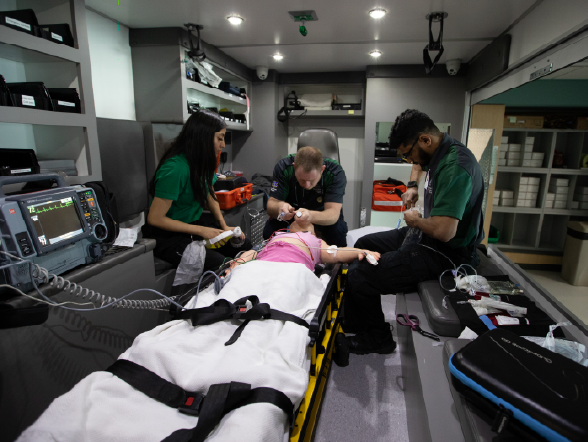
  • State-of-the-art simulation center on the Grand Island Campus with 4 adult, 1 pediatric, 1 newborn and 1 birthing hi-fidelity simulators. Mid-fidelity simulators are on each campus.
  • Onsite simulation instructor and coordinator that collaborate with your clinical instructor to provide a safe environment to learn and experience entire management of patient care.
  • Individualized remediation plans with Nursing Success Coordinators to support effective study skills
  • Skills labs to perfect your nursing technical skills
  • Recognition of academic honors through Organization of Associate Degree of Nursing Honor Society: Delta Nu.
  • Clinical facilities offering a variety of clinical experiences and opportunities.
  • Post-graduation program plan to assist in becoming prepared and pass NCLEX licensure exam.
  • Supportive and caring faculty that want you to succeed!

Central Community College Nursing Program Outcomes and Success Measures

Program Outcome 1

NCLEX-RN pass rates will be at or above 80% (national average)
NCLEX-RN pass rate for 2018: 90.77%

Program Outcome 2

Program completion rates will be at or above 75% (percent students completing within 150% of program length) for the Associate Degree Nursing (ADN) program.
Percentage of students completing ADN program is 78%.

Program Outcome 3

Ninety percent (90%) of the graduates in Associate Degree Nursing programs will be employed or be seeking advanced education within one year of graduation.
2017: 98% of students, that graduated from ADN program were employed as a registered nurse.

The Associate Degree in Nursing Program at Central Community College is accredited by:

The Accreditation Commission for Education in Nursing (ACEN)
3343 Peachtree Road, Suite 850
Atlanta, GA 30326
404-975-5000
www.acenursing.org

Immunization Important Information

Immunization Form

Immunizations are required to complete clinical experiences. 

A completed immunization form signed by your healthcare provider must be submitted at the time of application. 

If records are not available to support your immunizations, blood titers must be drawn and evaluated for immunizations needed. A titer cannot be done for the Tdap (Tetanus, Diphtheria, and Pertussis) as this is a vaccination. If the TdaP is older than 10 years, a booster is required. If any titer comes, back as negative or equivocal further immunizations are required. Results are to be submitted as part of the admission packet during enrollment period. If you have questions on how to complete, please contact the pre-nursing advisor.

The Two-step Tuberculosis Skin Test will be required prior to starting nursing courses. 

The Influenza vaccine should be obtained as soon as possible each fall. Documentation must be submitted to attend clinicals.

If any portion of the Immunization form is left incomplete, including your full name and student ID#, your application to the nursing program may be voided.

It is highly recommended that you retain a copy of your immunization record and submit original to Nursing Department during open enrollment period.

Additional Nursing Program Information

Achieve an Associate Degree in Nursing in 2 years by completing 4 semesters of nursing courses after prerequisites are met.

The length of time to complete a program is based on a student taking only the courses required for the program as listed in our online catalog. It does not include the cost of foundations courses that may be required based on assessment scores, retaking courses or taking courses that are not required by your program of study.

Your adviser will develop a plan of study to meet your personal needs.

Cost

Approximate Educational Costs

College tuition and fees are established by the Board of Governors and may be subject to change.

Category Cost
Tuition and Fees - 64 credit hours at $112 per credit hour (in state) $7,168
Uniforms, lab coat, shoes $250
Books & printed materials $800
Accessories - scissors, stethoscope, watch with a second hand $100
Laptop (estimated cost) $650
Student in Practicum Insurance per year $12
Licensing & NCLEX-RN expenses $323
Program fees $95
ATI fees (estimated) $2,850
Background Check/Drug Test $112
Total $12,360
ADN Purpose and Outcomes

Associate Degree Nursing Purpose

The purpose of the Associate Degree in Nursing is to provide students with the foundation of nursing knowledge, skills, and attitudes required for safe, competent, and comprehensive practice of professional nursing.

ADN Nursing Program Outcomes

Systematic evaluation of the Associate Degree Nursing program is utilized for the development, maintenance, and revision of the program and program outcomes. Program outcomes that measure the effectiveness and quality of the program are focused on the benefits to the student, employer, and community. The following outcomes have been identified.

  1. Performance on Licensure exam: The annual mean for the licensure exam (NCLEX-RN) pass rate for CCC ADN graduates will be at or above the national mean for the same year. (NCSBN)
  2. Program Completion: 80% of CCC students will complete the ADN program within 150% of the time from the start of the first nursing course.
  3. Graduate Program Satisfaction: 90% of the CCC ADN graduates will report satisfaction (3 or above mean rating on the Graduate Satisfaction Survey) with the preparation for nursing practice provided by the program.
  4. Employer Program Satisfaction: 90% of employers of CCC ADN graduates will report satisfaction (3 or above mean rating on the Employer Satisfaction Survey) with the competency of graduates as defined by the student learning outcomes and graduate competencies.
  5. Job Placement Rates: 90% or more of CCC ADN graduates seeking employment as a Registered Nurse will be employed within 6 months of program completion.

Associate Degree Nursing Student Learning Outcomes

  1. Prioritize patient-centered care based on the unique needs of the human throughout the lifespan.
  2. Explain the nursing process to promote ideal clinical outcomes through the use of critical thinking and clinical reasoning supported by evidence –based practice.
  3. Recommend the human to develop adaptive responses to stressors in order to reach an optimal state of wellness.
  4. Integrate effective communication strategies with individuals, families, groups, and members of the health care team.
  5. Exemplify professional role behaviors and caring attitudes within the scope of practice of the registered nurse reflecting a commitment to ensure high standards of nursing care.
LPN Purpose and Outcomes

Practical Nursing Program Purpose

The purpose of the Practical Nursing (PN) program is to provide students with the nursing knowledge, skills, and attitudes necessary to assist in the delivery on safe, competent care under the direction of a Registered Nurse or other licensed practitioner.

Practical Nursing Program Outcomes

Program outcomes that measure the effectiveness and quality of the program are focused on the benefits to the student, employer, and community. The following outcomes have been identified.

  1. Performance on Licensure exam: The annual mean for the licensure exam (NCLEX-PN) pass rate for CCC PN graduates will be at or above the national mean for the same year. (NCSBN)
  2. Program Completion: 80% of CCC students will complete the PN program within 150% of the time from the time of the first nursing course.
  3. Graduate Program Satisfaction: 90% of the CCC PN graduates will report satisfaction (3 or above mean rating on the Graduate Satisfaction Survey) with the preparation for nursing practice provided by the program.
  4. Employer Program Satisfaction: 90% of employers of CCC PN graduates will report satisfaction (3 or above mean rating on the Employer Satisfaction Survey) with the competency of graduates as defined by the student learning outcomes and graduate competencies.
  5. Job Placement Rates: 90% or more of CCC PN graduates seeking employment as a Licensed Practical Nurse will be employed within 6 months of program completion.

Practical Nursing Student Learning Outcomes

  1. Provide patient-centered care based on the unique needs of the human throughout the lifespan.
  2. Manage in the use of the nursing process to promote ideal clinical outcomes through the use of critical thinking and clinical reasoning supported by evidence – based practice.
  3. Guide the human to develop adaptive responses to stressors in order to reach an optimal state of wellness.
  4. Select effective communication strategies with individuals, families, groups, and members of the health care team.
  5. Establish positive role behaviors and caring attitudes within the scope of practice of the licensed practical nurse reflecting a commitment to ensure high standards of nursing care.
Transfer Nursing Courses

Central Community College’s Nursing Program has collaborated with several colleges and universities within the state that allow for a seamless transition to further education to a bachelor’s of science in nursing.  The agreements stipulate that credits earned from the associate degree of nursing program at CCC are accepted, decreasing the amount of time in earning your BSN. The acceptance into a BSN program is subject to those college or university’s policies and requirements. Additional general education courses needed for the BSN, can be earned while attending CCC saving time and money. 

Earning your BSN can be completed on your time, your pace, and your preferred learning style. Programs are offered either face-to-face, on-line, or a hybrid. Below is a list of colleges/universities that have agreements with CCC. Check them out online to determine the fit best for you!

Transfer Colleges

Bellevue University

Bryan College of Health Science

Chamberlain University

Clarkson College

Concordia University-Nebraska

Doane University

Midlands University

Nebraska Methodist College

University of Nebraska Medical Center

Contact


 Dean of Nursing


Pam Bales

Dr. Pam Bales
Area Wide
Phone Number - TBA
Email - TBA

Admin. Assistant


Bev Mackie

Bev Mackie
Columbus 
402-562-1233 
[email protected]

Admin. Assistant


Donna Moore

Donna Moore
Grand Island 
308-398-7456 
[email protected]


Nursing Advisor

Denise Kingery

Denise Kingery
308-398-7438
[email protected]

Simulation Team

Tami Jones

Tami Jones, BS
308-398-7569
[email protected]


Marcia Donley

Marcia Donley, MSN, RN
308-398-7565
[email protected]

 
Columbus

Brenda Eller

Brenda Eller, MSN, RN
402-562-1430
[email protected]


Alysha Linder, MSN, RN
402-562-1406


Patricia Oborny, BSN, RN
402-562-1266
[email protected]


Amanda Rutter, MSN, RN, CEN, CPEN
402-562-1431
[email protected]

Grand Island

Mary Rose

Mary Rose, BSN, RN, Director of Nursing
308-398-7338
[email protected]


Terri Bossow

Terri Bossow, MSN, RN
308-398-7491
[email protected]


Maureen Horne

Maureen Horne, BSN, RN
308-398-7484
[email protected]


Allison Kleier

Allison Kleier, DNP, RN
308-398-7564
[email protected]


Barb McGraw

Barb McGraw, MSN, RN, CNE
308-398-7444
[email protected]


Amanda Rooker

Amanda Rooker, MSN, RN
308-398-7457
[email protected]


Shari Stickels

Shari Stickels, BSN, RN
308-398-7807
[email protected]


Marie White

Marie White, BSN, RN
308-398-7937
[email protected]


Kearney

Holly Goodell

Holly Goodell, MSN, RN, APRN, FNP-C
308-338-4005
[email protected]

Ross Huxoll

Ross Huxoll, BSN, RN
308-338-4003
[email protected]

Bryce Zavadil

Bryce Zavadil, BSN, RN
308-338-4017
[email protected]


Katy Zavadil

Katy Zavadil, MSN, RN
308-338-4004
[email protected]


Nursing Program FAQ

Are prerequisite courses offered by Central Community College?

Yes. All general education courses that are required for the ADN program can be taken at CCC. You may also take general education courses that are needed for continued educational mobility (BSN) through CCC.

Does Central Community College offer the Certified Nursing Assistant (CNA) course?

Yes. You can take CNA courses on any campus and the Kearney Center. You can register for HLTH 1200 or contact Extended Learning Services.

Nursing Assistant Training

What makes a registered nurse?

A registered nurse is known as a RN. To become registered, you first obtain a nursing degree then pass a national licensing exam after you graduate. Both associate degrees (ADN) and bachelor degrees (BSN) graduate as entry-level practitioners and earn the same RN designation. 

Where and when should I apply?

Application opens in January, please check nursing webpage for exact dates.

What is the TEAS?

The TEAS exam is part of the admission requirement for the nursing program.

ATI TEAS FAQ

How new are the nursing educational facilities?

The Kearney division just moved in the new Central Community College building, fall of 2017. The Columbus division completed a renovation project to the health science wing in 2022. The Grand Island division’s facility was opened in 2010. The college is supportive of ensuring that all equipment, supplies, and simulators used in the nursing program are up-to-date with technology and healthcare environment.

What supplies and equipment will I need?

For clinical rotations, you will need a stethoscope and professional uniform with lab jacket (scrubs). Textbooks are available through the CCC Bookstore. For all ADN coursework, having your own laptop/tablet computer is required.

How long does the program take to complete?

The nursing program is 5 semesters in length. Students can take the NCLEX-PN licensure exam after successful completion after 2 semesters. Then continue on to complete associate degree in nursing after semesters 3 and 4 with opportunity to take NCLEX-RN.

Are all nursing course offered every semester?

No. Students take ADN courses in a certain progression over the 5 semesters. 

Nursing program plan of study

Are there summer classes?

No. The traditional ADN program does not offer summer courses in nursing. You may, however, take any required general education course.

Where will I complete clinical training?

You will receive learning through lab/simulation through the college’s state of the art simulation center. You will also complete clinical rotations in area medical centers, hospitals, and other health facilities. While faculty make every effort to notify you well in advance of your clinical schedule, things do sometimes change due to circumstances outside our control. Please plan some flexibility in your schedule to allow for unforeseen changes in your clinical rotation schedule.

Can I work during the ADN Nursing Program?

Yes. Many students choose to work during evenings or weekends and during the summer. We recommend that you work part-time during semesters in order to devote adequate time and energy to your nursing studies. Please understand that clinical rotation schedules may sometimes change, so we recommend asking your employer if some flexibility can be scheduled if needed.

Is there help with courses?

Yes. You will be assigned a nursing advisor when accepted into the program. Your advisor can help answer program questions. Your instructors can help with specific question that pertain to the nursing course you are registered for.

I have heard about a Delta Nu organization, can I apply to that?

Alpha Delta NU is the honorary academic organization for Associate Degree in Nursing students. Central Community College’s chapter is Delta NU. The honor society recognizes the academic excellence of students enrolled in the ADN program. You will receive a letter to apply to the chapter if you earn a grade of “B” or better in all nursing courses and have no failures. The student will also need to demonstrate conduct in the classroom and clinical areas that reflect integrity and professionalism.

How do I earn a bachelor’s degree after graduating from the ADN program?

The nursing program has several agreements with colleges/universities that offer the BSN program. At this time, the BSN programs with agreements will accept all credits earned for the associate degree in nursing. You will have approximately 18 months to complete a BSN. Studies can be delivered in all formats, so it is easy to choose a program that fits your needs or style of learning.

Nursing Photos

There are no items to display.