Environmental Sustainability Action Plan (ESAP)

We hope you join Central Community College’s 3C Initiative, our collective efforts across the college to foster positive change and educate for a sustainable environment for everyone. Below you can learn about the college’s Environmental Sustainability Action Plan – our commitment, goals and actions in education, energy, waste, procurement, for our campuses and centers and more – and what we are doing now to make a difference.

Central Community College’s Environmental Sustainability Action Plan (ESAP) spells out our commitment, goals and actions CCC is taking to be a great steward of our environment – for our students, community and the planet.

Explore CCC’s areas of impact and our visionary environmental stewardship commitment and leadership goals below.

Earn and eBadge at Central

SLPS

Presentations for 2025 season include:

  • Ground Up Advocacy Bootcamp presented by Re:wild Your Campus
  • Bitter Nectar, Toxic Pollen: Pollinators and Plant Chemicals presented by Leif Richardson a Conservation Biologist with Xerces Society
  • Student Engagement in Campus Waste with AASHE
  • The Future of Biofuels: Emissions Accounting and Modeling presented by Brent Sohngen, Professor of Environmental and Resource Economics, The Ohio State University, Chris Malins, Director Cerulogy, Corinne Scown, Senior Scientist, University of California, Berkeley, and David Wear, Senior Fellow; Director, Land Use, Forestry, and Agriculture Program

Training

Students 4 Sustainability (S4S) is a student-led organization at CCC dedicated to promoting environmental awareness and sustainable practices. The club’s goal is to empower students to make meaningful changes in their lives and communities through hands-on projects, education, and collaboration.

S4S welcomes any current CCC student interested in sustainability and the environment. Members can join projects and activities that match their interests, with past activities including highway cleanups, planting pollinator gardens, and creating educational displays for the Nebraska State Fair.

Current Goals

  • Annually: yes e-Badges
  • Annually: develop key partnerships with environmental sustainability and native plant industries offering potential internships and jobs.
  • 2027: Develop an accredited Sustainability Certificate with the Sustainability Education and Accreditation Commission (SEAC)

As a member of Second Nature’s Climate Leadership Network, Central Community College is dedicated to reducing its greenhouse gas emissions. Strategies include reducing energy consumption, improving energy efficiency and investing in clean and renewable energy sources.

Achievements to Date

Wind turbine was built on the Hastings campus

  • 22% of the college’s fleet vehicles are currently hybrid electric.
  • CCC began purchasing hybrid electric fleet vehicles in 2012. As of 2018, 34 percent of the college’s fleet vehicles were gasoline-electric, non-plug-in hybrid vehicles.
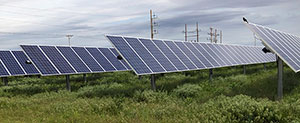
  • In 2012, a 3.7 kW Skystream wind turbine and a 17-kW solar array were added on the Hastings Campus. These systems are used for educational purposes in the campus’ mechatronics program and provide electricity to the Merrick building on campus.
  • In 2016, a 1.7 MW wind turbine was built on the Hastings campus through a partnership with Bluestem Energy Solutions, Hastings Utilities and CCC. The wind turbine produces enough electricity annually to power the campus and any excess electricity flows into the Hastings Utilities grid.
  • In 2017, a new Kearney Center (right) was built to LEED Silver standards with numerous energy-saving features. These features include daylighting in the hallways and classrooms, energy efficient lighting, Solatubes in two classrooms and one lab, SageGlass on east facing windows and a geothermal energy system.CCC 350 solar panels at the Kearney Center.
  • In 2018, CCC purchased 350 solar energy shares in the Kearney Community Solar Project.  Each share is equal to 150 kWh/month, which equals 100 percent of the average monthly electricity usage at the Kearney Center.

    The Kearney Center received the first GreenPower certificate associated with the Kearney Community Solar Project. CCC retains the environmental attributes associated with the purchased carbon free energy shares.

  • CCC has improved its ability for its employees to videoconference, thus reducing the need to travel to meet in person.
  • From the 2013 baseline, CCC has reduced Scope 1 (on-campus) emissions by 44 percent, Scope 2 (purchased electricity) emissions by 78 percent, Scope 3 (indirect) emissions by 85 percent and overall emissions by 80 percent.

Current Goals

Annually: Increase use of electric charging stations on each campus and the Kearney Center by 10 percent.

By 2028: Each campus will be carbon neutral in electricity use on campus through local renewable energy projects and power purchase agreements.

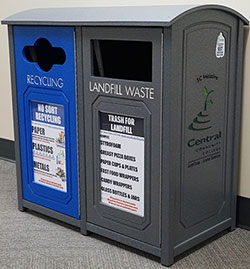
Central Community College understands the importance of taking steps to reduce its carbon footprint and protect natural resources through recycling and implementing other policies that will reduce the amount of waste sent to the landfill.

The goal is to develop a culture of mindful students and staff who collaborate to conserve resources through reusing supplies and reducing waste. From the use of post-consumer recycled paper, to expanding its compost project college-wide, CCC envisions a college-wide transformation on waste reduction.
Achievements to Date

Recycle bins in the hallways and at desks on CCC’s campuses

  • CCC is working to annually increase FSC-certified and post-consumer waste content of paper by 10 percent by monitoring the paper purchased across the institution.CCC culinary arts program implemented a compost program.
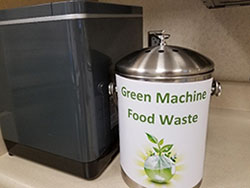
  • In 2023 CCC purchased 3 bin composting systems for all 3 campuses with grant funds awarded by the Nebraska Recycling Council. As of 2025 CCC has diverted thousands of pounds of food waste from the cafeterias and breakrooms by creating compost that we use in our vegetable and pollinator gardens on campus.
  • CCC’s dining operator, Chartwells, encourages the use of reusable containers with a discount program tailored to benefit those who bring their own food container.
  • CCC’s three campus locations and the Kearney Center participated in the Trex Plastic Bag Kickoff Recycling challenge.  The goal was to collect 500 pounds of plastic bags. In 2019, Central Community College was awarded a Trex bench made out of the collected plastic grocery bags, plastic film and wood fiber; the bench was added to the Columbus pollinator garden.
  • In 2013, Central Community College became member of the Nebraska Recycling Council, formerly WasteCap Nebraska. This partnership has resulted in access to programs, resources and a network of people in businesses, nonprofits, schools and communities across Nebraska working to maximize the economic and environmental benefits of materials management. CCC received the organization’s 2016 Green Team of the Year Award. The award is presented to a business or community that has excelled at resource recovery and recycling.
  • In 2023 CCC was named Member of the Year by The Nebraska Recycling Council and recognized for the work done to divert food waste from the cafeterias and breakrooms to our composting program on all three campuses.

Current Goals

Annually increase FSC-certified and post-consumer waste content of paper by ten percent from 2019-2020 baseline.

By 2026 - divert a minimum of 25 percent of college landfill and construction waste for recycling and reuse.

2026 – Decrease college paper use to achieve a 30 percent reduction from the 2015-16 baseline

A college campus is more than a collection of buildings, parking lots and green spaces; it supports intellectual and social interactions among the people within those spaces. Because of this, the campus landscape should include outdoor use areas that encourage the campus community – students, faculty and staff – to engage with the natural environment and with each other. These outdoor spaces and the experiences they offer, help to support the learning process, giving the campus its sense of place.

The Grand Island Campus sustainable landscape master plan was completed from 2013-2015. Implementing the master plan will improve the health of land, water and everyone on campus. The plan recommends improving soil characteristics, protecting soils during construction and changing plant species and maintenance practices to improve land health. These actions will improve the ability of soils to absorb and release moisture and support increased micronutrient uptake in plants.

Primary beneficiaries of improved land and water health on campus are its staff and students. They will benefit from the reduced use of chemicals and air pollution associated with landscape maintenance. A visually, more diverse campus landscape, served by an interconnected system of walking trails, will encourage people to spend more time outdoors – experiencing the benefits of active lifestyles while being exposed to reduced levels of herbicides and pesticides.

Pollinator Habitats

CCC recognizes the important role that pollinators play in our lives. Since 2017, CCC has increased the number of native plants across its campuses and centers through the installation of pollinator gardens on all three campuses.

The pollinator plants are native to Nebraska, making them hardy, low-maintenance and able to endure brisk winters and hot and humid summers. The plants bloom throughout the three seasons to attract pollinator insects.

  • The pollinator garden at the Columbus Campus is approximately 7,200 square feet and has about 1,460 flowers, grasses, shrubs and nesting boxes. The garden is utilized as a learning lab for community education, environmental sustainability, agriculture and entomology.
  • In October 2017, the CCC Grand Island Campus 6,000-square-foot pollinator garden was completed. The pollinator garden was planted with more than 25 different types of native flowers, perennials and deciduous shrubs that provide nectar and pollen for a wide range of pollinators, including monarch butterflies, bees, moths, birds and many more. Diverse plants were selected to survive the wind, cold and drought and to provide food and shelter resources for pollinators in three seasons. The garden does more than just feed pollinators, it ensures an ecologically-friendly habitat that supports their health and safety through water-wise practices, soil health and sustainable landscape management. A winding crushed stone path and a northwind switch grass protective berm provide an outdoor walking space for students, staff and faculty. The garden serves as an educational opportunity, where students have the chance to enhance their knowledge through hands-on projects and earn e-Badge proficiencies.
  • Since 2014, CCC’s Extended Learning Services has offered a beekeeping course on the Grand Island campus. The yearlong Beginning Beekeeping course meets once a month and introduces students to the honeybee and its environment.
  • In 2017, CCC was named a Bee Campus USA, becoming the 29th institution in the United States and is currently the only one in Nebraska. The Bee Campus USA program endorses a set of commitments, defined in reporting, for creating sustainable habitats for pollinators, which are vital to feeding the planet. One in every three bites of food we eat is courtesy of insect pollination. Equally important, ninety percent of all wild plants and trees rely on pollinators for the survival of their species. Pollinators are facing global declines due to loss of habitat essential for food and shelter, diseases and parasites and inappropriate pesticide use. Bee Campuses work to protect pollinators by raising awareness, enhancing pollinator habitats and celebrating achievements.
  • The CCC-Kearney Center has five bioretention gardens that help capture and treat storm water runoff before being released into on-site detention basins. The sediment traps help to collect silt/sediment at inflow pipes into basins. Although there are no current municipal requirements for water quality treatment, the bioretention gardens were sized to provide the water quality volume for eighty percent of the building site.

Current Goals

Annually – Use food waste compost in grounds, culinary, native and pollinator campus gardens.

Annually – Reduce overall pesticide and fertilizer use on each campus through compost and natural pesticides.

2026 – Decrease water usage on all campuses by ten percent.

Central Community College strives to create strong relationships between the college and the different communities it serves. Through community service and the promotion of health projects, CCC has established partnerships with organizations such as local community agencies in the communities of Columbus, Grand Island and Kearney, as well as the Nebraska State Fair.

As part of CCC’s responsibility to care for the health and wellbeing of all, multiple projects and initiatives are targeted to help communities become more walkable and bikable. CCC envisions the opportunity to volunteer in many other community service projects as well as develop a culture of walking and biking in every community it serves.

Achievements to Date

  • CCC has celebrated Earth Day with multiple events including an annual wellness walk or bike ride.
  • In partnership with the Grand Island Clean Community System, the environmental sustainability office hosted a semi-annual highway litter clean up since 2016. Each year students and staff volunteer their time to pick up litter from the sides of one of the highways in Grand Island.
  • CCC implemented a bike share program for students and employees to use free of charge. As one of the first bike share programs in our communities and at a rural community college, CCC is leading the way for an environmentally sustainable and healthy society.

Current Goals

Annually – The environmental sustainability office volunteers in a minimum of three community service and health projects.

Annually – Organize a bike/walk/outdoor event on each campus.

Annually – Plan America Recycles Day, Earth Month and other sustainability and community events in partnership with faculty, various on-campus departments/staff, local businesses and nonprofits.

Central Community College hosts campus events and collaborates with community partners to share resources and information that promote sustainable practices. Events include Earth Month, the Nebraska State Fair Sustainability Pavilion, America Recycles Day, and a campus-community resilience committee.

Achievements to Date

  • CCC’s environmental sustainability office has hosted events across all campuses throughout the month of April to celebrate Earth Day. These events allow local organizations to connect with CCC students and employees and for students to showcase their sustainability projects. A variety of presentations and tours give students, employees and community members the opportunity to learn about sustainability-related topics including renewable energy, waste reduction, ecology, agriculture and research.
  • CCC has celebrated Nebraska Recycles Day on November 15 at the Columbus Campus. The event hosts representatives from local organizations, including Nebraska Recycling Council, Keep Columbus Beautiful. Student projects from the Biology course are also displayed.
  • CCC’s environmental sustainability office has hosted presentations and student projects at the Nebraska State Fair Sustainability Pavilion. The presentations and projects have included information on pollinators, sustainable agriculture, sustainable building materials, vermicomposting and waste reduction.
  • As a signatory of Second Nature’s Climate Commitment, CCC completes an annual greenhouse gas inventory and environmental sustainability action plan (ESAP).

Current Goals

Annually – Plan America Recycles Day, Earth Month, pollinator festival and other sustainability and community events in partnership with faculty, various on-campus departments/staff, local businesses and nonprofits.

Annually – Participate in three presentations at local community events or in media outlets.

Annually – Participate in three local community sustainability groups/committees and volunteer at shared planned local events.

Contact Us

Benjamin Newton
Environmental Sustainability Director
308-398-7962
Email Benjamin
Follow us on Facebook

Follow us on X